
Nose and sinuses
I sneeze every morning and my nose never stops running
Allergy (allergic rhinitis) treatment in KPHB, Hyderabad
Allergy is controlled, not cured, and controlled well it stops running your day.

Does this sound like you?
- Bouts of sneezing, especially in the morning
- An itchy nose, itchy eyes, an itchy roof of the mouth
- A clear, watery discharge
- A blocked nose that is worse at night
- Worse with dust, in certain seasons, or around animals
Allergy treatment at Sinocare ENT Hospital, KPHB Colony, Kukatpally, starts by finding what the nose is reacting to. Allergic rhinitis is the nose reacting to something in the air that it should ignore: dust mites, pollen, mould, animal dander. It is very common in Hyderabad. It is not dangerous, and it is treated well when it is treated properly. It matters here for a second reason. It is the commonest thing behind a nose that has been blocked for months. Treating it first is what stops people having operations they did not need.
What it looks like inside
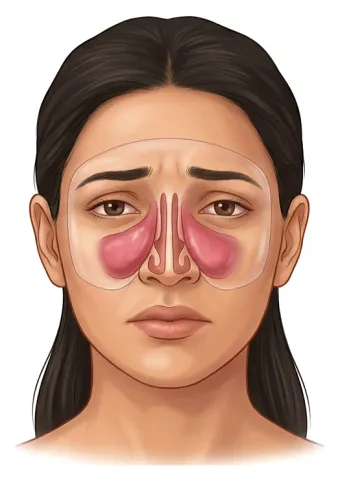

What it usually is
The lining of the nose swells, itches and runs in response to an allergen. Dust mite lives in bedding and soft furnishings. It is the usual culprit for symptoms all year round that are worst on waking. Pollen and moulds give seasonal symptoms. The same reaction affects the eyes and the throat, and in some people the chest. That is why asthma and allergic rhinitis travel together. Over years, the shelves on the side walls of the nose (the turbinates) can swell enough to stay blocked even when the allergy is controlled.
What happens at the first visit
The history usually names the trigger. The nose is examined with a thin camera (an endoscope). It shows the pale, swollen lining of allergy and rules out the other causes of a blocked nose. Where it will change the plan, allergy testing is arranged at the hospital in KPHB. It is either a blood test or skin tests, to confirm what you are reacting to. Asthma is asked about directly.
How allergy is treated, and what is tried first
- Avoidance where it is realistic. Dust-mite covers on the mattress and pillows, and bedding washed hot every week. Soft toys out of a child’s bed, and windows closed in the pollen season.
- A steroid nasal spray, the mainstay, used every day through the season or the year, aimed correctly. It takes a week or two to work fully, which is why it is not a rescue medicine.
- An antihistamine, a non-drowsy one, for the sneezing and itching.
- Saline rinses to clear the allergen and the mucus.
- Eye drops where the eyes are the worst part.
- Immunotherapy, for the person whose trigger is proven on testing and whose symptoms do not settle on the sprays. It means small, regular doses of the allergen over a period of years. They retrain the response rather than damp it down. It is a commitment, and it is offered here.
Used together and consistently, these control allergic rhinitis in most people. Control is the word: allergy is managed, not cured, and it settles when the trigger is managed.
When to come in sooner
- A blocked nose that stays blocked even when the sneezing and itching are controlled
- Wheeze or shortness of breath with the nasal symptoms
- Symptoms on one side only, or with bleeding
- Repeated sinus infections on top of the allergy
If an operation is ever needed
Not for the allergy itself. Sometimes the shelves inside the nose have swollen for good and stay blocked, even with the allergy controlled. Then reducing them is a short, one day procedure done here by Dr. Santosh. It makes room while leaving the shelves doing their job. The allergy treatment continues afterwards. Surgery made room, it did not cure the allergy, and you are told that before rather than after.
Questions patients ask
Can allergy be cured?
Controlled, reliably. Cured, not with the standard medicines. Some people grow out of it; most manage it well for years.
Are steroid sprays safe to use every day?
Yes, at the prescribed dose, including in children. Very little is absorbed, and they are the most effective single treatment.
I have used the spray and my nose is still blocked. Why?
Usually one of three things. It was not aimed correctly, or it was not used long enough. Or the block is now in the structure of the nose: the shelves inside it, or a bent wall between the nostrils (the septum). The thin camera shows which.
Should I get tested?
Where the result would change what you do, yes. Knowing it is dust mite changes the bedroom; knowing it is a seasonal pollen changes the timing of treatment.
Is this the same as “dust allergy”?
Usually, yes. Dust mite is one of the commonest triggers, and testing confirms whether it is that, a pollen, mould or animal dander.