
What we treat
We start with your symptoms, not with surgery. Most visits end with treatment, a test or reassurance, and an operation is advised only when it is needed. We see adults and children, and consult in English, Hindi and Telugu.

Nose and sinuses
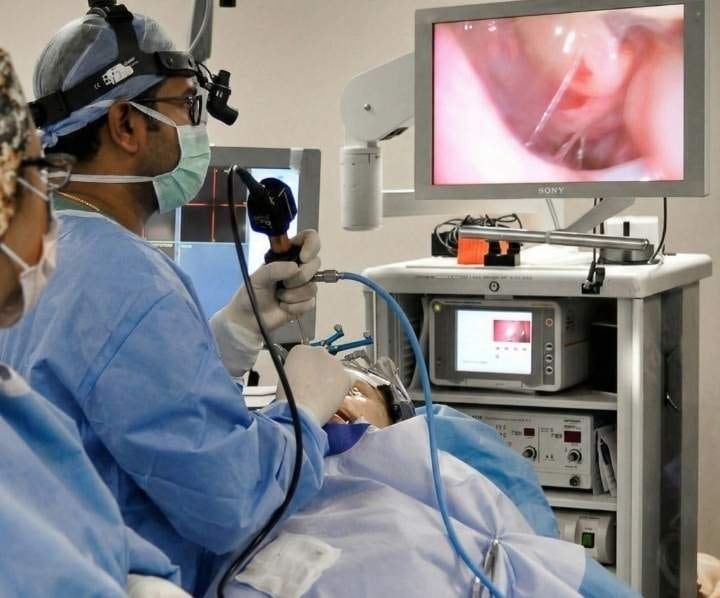
The nose is examined with a thin camera (an endoscope) at the first visit. Allergy testing and immunotherapy are done at the hospital, and medicines are tried properly before any operation.
Book AppointmentBlocked nose
A blocked nose has more than one possible cause. It can be a bent wall between the nostrils (the septum) or swollen shelves inside the nose (the turbinates). It can be allergy, or more than one at once. So it is examined, not assumed. Sprays used the right way come first. Septoplasty or turbinate reduction is advised only when they have not worked.
Learn moreSinusitis
Sinusitis shows up as facial pressure, a heavy head and a dull sense of smell. A CT scan is taken only when the examination calls for it. Endoscopic sinus surgery is advised when the scan and the symptoms agree.
Learn moreAllergy
Allergy is tested at the hospital. It is treated with the right sprays and, where needed, with immunotherapy instead of years of tablets.
Learn moreNasal polyps
Soft growths (polyps) can block the nose and dull the sense of smell. They are seen with the thin camera and treated with medicines first. Endoscopic surgery is advised when they do not settle.
Nosebleeds
The bleeding point is found on examination and, where possible, sealed with cautery at the same visit.
Learn moreThe crooked nose
A nose that is bent and blocked is treated as one problem. Septorhinoplasty straightens the wall between the nostrils and the outside of the nose together, and it is planned for breathing first.
Throat and voice
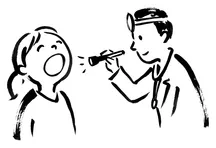
The throat and the voice box are examined with a flexible scope. The examination is recorded and shown to you. A sleep study comes before any decision about snoring.
Book AppointmentThe child who snores
Snoring in a child usually points to an enlarged gland behind the nose (the adenoids) and enlarged tonsils. The nose and this gland are examined with the thin camera first. When surgery is needed, the adenoids or tonsils are removed by coblation, from about age two.
Learn moreRepeated throat infections
The infections are counted and documented first. Tonsillectomy, done by coblation, is advised when the pattern justifies it.
Learn moreSnoring and sleep apnoea
A sleep study comes first, done at home for most people. Treatment ranges from weight and airway measures to surgery, and the study decides which.
Learn moreHoarse voice
A voice that stays hoarse for more than three weeks needs the voice box examined. This is done with a recorded laryngoscopy at the hospital. Voice rest and reflux treatment come before any operation on the vocal cords.
Learn moreDifficulty swallowing
A swallowing problem, or a lump-in-the-throat feeling, is examined with the same scope, so the cause is seen before it is treated. Reflux is a common cause, and treatment starts there when it is found.
Ear
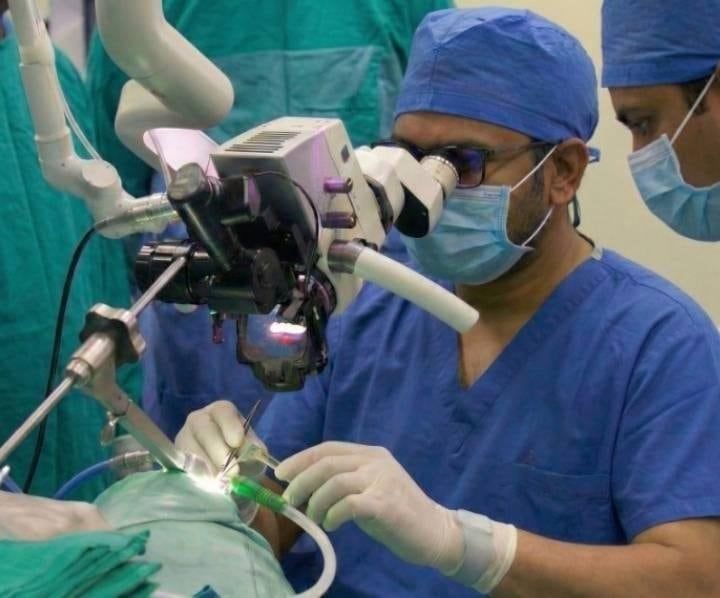
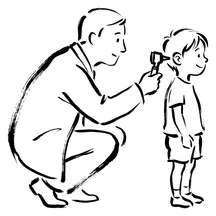
Every ear visit starts under the microscope. Hearing is measured at the hospital with audiometry and tympanometry, so decisions rest on what is seen and what is heard.
Book AppointmentEar pain and infection
The ear is examined under the microscope at the visit, so the cause is seen, not guessed. It is treated and re-checked until it has settled.
Blocked ear and wax
Wax is removed under the microscope at the visit, not by blind syringing. Anything that should not be in an ear is removed the same way.
Learn moreThe discharging ear
The ear is examined under the microscope to find what keeps the discharge going. Repair of the eardrum (tympanoplasty) is discussed when the ear is ready for it, not before. So is mastoid surgery, for an ear that is not safe to leave.
Learn moreGlue ear in children
Glue ear is fluid behind the eardrum. It is watched and re-tested first. Small ear tubes (grommets) are placed when hearing and time say so, from about age two.
Learn moreHearing loss
Hearing is measured first. Wax, fluid, a stiff hearing bone and nerve loss are different problems with different answers. They range from a small operation (stapedotomy) for the stiff hearing bone to hearing aid fitting at the hospital.
Learn moreTinnitus
The ear is examined and the hearing is tested. The causes that can be treated are ruled in or out before anything else.
Learn moreVertigo
Dizziness is examined properly first. When it turns out to be a positional inner-ear problem, it can respond to a positioning treatment at the visit itself.
Learn more
Neck and thyroid
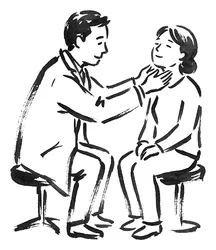
A neck lump is never guessed at. An ultrasound and a needle test are arranged from the hospital and reviewed with you before any decision.
Book AppointmentThyroid swelling
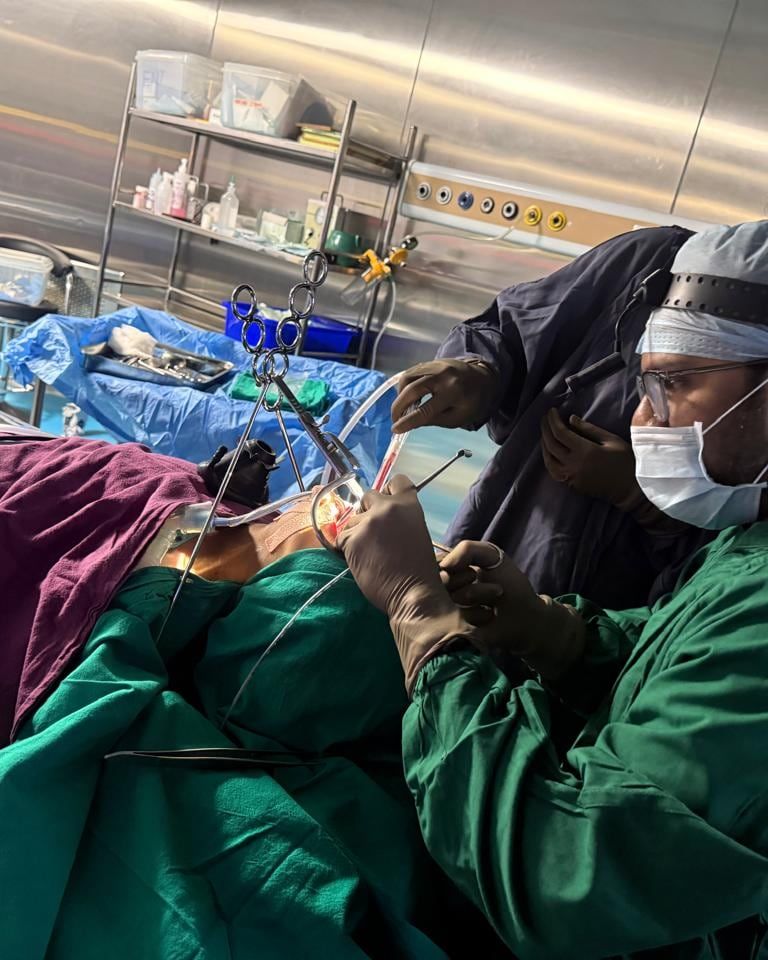
The swelling is worked up with an ultrasound and a needle test (FNAC) before anything is decided. Many turn out to need watching rather than an operation. Surgery is discussed with the findings on the table.
Learn moreNeck lumps
A neck lump is assessed, imaged and diagnosed before anyone talks about removing anything.