
Ear
There is a ringing in my ears
Tinnitus (ringing in the ears) treatment in KPHB, Hyderabad
Tinnitus is common and, for most people, manageable. The examination rules out the few causes that need treating.
Does this sound like you?
- A ringing, hissing or buzzing that nobody else hears
- Worse in a quiet room or at night
- Started after loud noise, a cold, or an ear infection
- In one ear only
- With hearing loss or dizziness
Tinnitus treatment at Sinocare ENT Hospital, KPHB Colony, Kukatpally, starts with a hearing test. The pattern of hearing is the biggest clue to the cause. Tinnitus is a sound heard with no outside source: a ringing, a hiss, a hum, a buzz. It is very common, and most people have it briefly at some point. For most people who have it all the time, it is a nuisance rather than a sign of anything serious. The visit has two jobs. One is to find the small number of cases with a cause that can be treated or that matters. The other is to help everyone else make it quieter.
What it usually is
Most tinnitus goes with some hearing loss, often too mild to have been noticed. When the inner ear sends less signal, the brain turns up its own volume. The tinnitus is the sound of that. Noise, age, wax against the eardrum, fluid in the middle ear, stiffening of the hearing bones and some medicines all produce it. Stress and poor sleep make it louder. Tinnitus in one ear only, or with dizziness, is looked at more carefully. A small number of those have a cause in the nerve that should be found.
What happens at the first visit
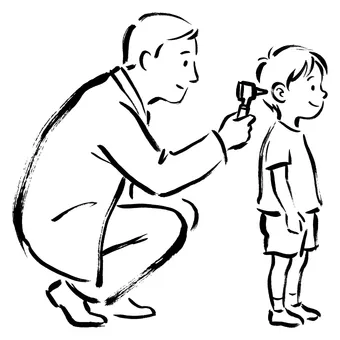
The ears are examined under magnification, and any wax is removed. A hearing test is done at the hospital in KPHB, because the pattern of hearing loss is the biggest clue to the cause. A tympanogram checks the middle ear. Blood pressure and medicines are reviewed. A scan is arranged in some cases. These are tinnitus in one ear only, tinnitus that pulses with the heartbeat, and tinnitus with hearing loss on one side or dizziness. You leave knowing whether there is a cause to treat. If there is not, you leave knowing what actually helps.
How tinnitus is treated, and what is tried first
- Treating what is treatable: wax, fluid, infection, a medicine that can be changed.
- A hearing aid, where there is hearing loss. For many people it is the single most effective thing for tinnitus. It gives back the sound the ear was missing, so the brain no longer has to turn its own volume up.
- Sound at night: a fan, a radio at low volume, an app. Silence is where tinnitus is loudest.
- Sleep, caffeine, stress. Each of them turns the volume up or down, and each is within reach.
- Understanding it. Tinnitus that is understood as harmless is easier to ignore, and the brain does learn to ignore it. This truly helps. It is how most people’s tinnitus fades into the background.
When to come in sooner
- Tinnitus in one ear only, particularly with hearing loss on that side
- Tinnitus that pulses in time with your heartbeat
- Tinnitus with dizziness, or after a head injury
- Tinnitus that began with a sudden drop in hearing, which should be seen within a day or two
If an operation is ever needed
Rarely, and only for the underlying cause rather than for the tinnitus itself. That can be a hole in the eardrum, fluid that will not clear, or a stiffened hearing bone. For the great majority, the treatment is a hearing aid, sound, and time.
Questions patients ask
Is there a cure?
There is no tablet that switches tinnitus off, and anyone selling one is selling something else. A great deal makes it quieter. Most people reach a point where they notice it only when they think about it.
Will it get worse?
Usually not. It goes up and down with sleep, stress and noise. Protecting your hearing from loud noise is the one thing that stops it getting louder over years.
Is it a sign of something serious?
Very rarely. Those cases are the ones with tinnitus in one ear, with dizziness, or pulsing with the heartbeat. That is why the examination and the hearing test are done first.
Does a hearing aid really help tinnitus?
For people with hearing loss, often yes, and sometimes a lot. It is one of the first things offered where the test shows a loss.
Is there a treatment for ringing in the ears?
There is no tablet that switches it off. The hearing test finds a cause where there is one. A hearing aid helps many people who have a loss. Most people reach a point where they notice it only when they think about it.