
Ear
My hearing is not what it was
Hearing loss treatment and hearing tests in KPHB, Hyderabad
A hearing test settles most of the question in twenty minutes. Many causes are simple.

Does this sound like you?
- Asking people to repeat themselves
- Struggling to follow conversation in a noisy room
- Hearing that has faded slowly over years
- Hearing that dropped suddenly in one ear
- Hearing loss that runs in the family
Hearing loss treatment at Sinocare ENT Hospital, KPHB Colony, Kukatpally, starts with a hearing test in the same visit. Hearing loss is common, and it has several quite different causes. The first job is to find out which one you have. A hearing test done at the hospital separates them in about twenty minutes. Some causes are as simple as wax. Some are managed with a hearing aid. A few are corrected with an operation. All of them are easier to deal with than hearing loss left untreated, which brings a slow withdrawal from conversation.
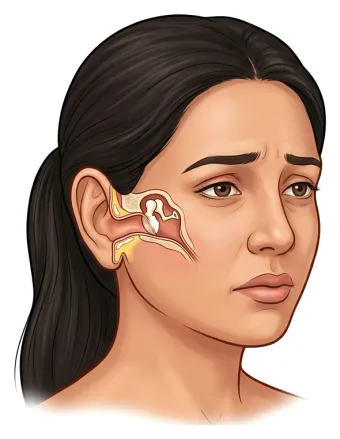
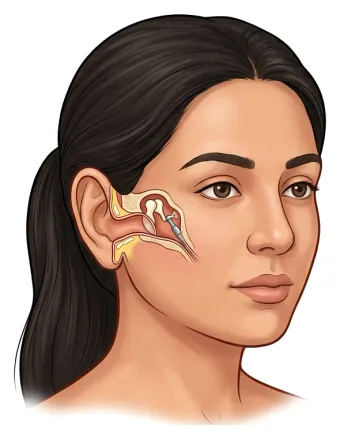
What it looks like inside
What it usually is
Hearing loss falls into three kinds. Conductive loss is a problem in the outer or middle ear. It can be wax, fluid behind the drum, a hole in the drum, or a stiffened hearing bone (otosclerosis). Sound is not getting through. Sensorineural loss is a problem in the inner ear or the nerve. It can come with age, noise or some medicines. Occasionally it is a sudden loss with no clear cause. Sound gets through but is not picked up clearly. Mixed loss is both.
The difference matters. Conductive loss can often be corrected. Sensorineural loss is usually managed rather than reversed.
What happens at the first visit
The ear canal and eardrum are examined under magnification, and any wax is removed on the spot. Then comes the hearing test (audiogram), done at the hospital in KPHB. It measures each ear across the range of pitches. It shows whether the loss is conductive, sensorineural or mixed. A tympanogram checks the eardrum and middle ear. Tuning fork tests add to the picture. Where one ear is much worse than the other, or the loss was sudden, further tests or a scan may be arranged.
What helps, and what is tried first
- Wax removal, under the microscope, for the commonest cause of all.
- Treating fluid or infection in the middle ear.
- A hearing aid, fitted to your audiogram. It is for sensorineural loss, and for many people with conductive loss who prefer not to have surgery. Modern aids are small and effective. The fitting is done at the hospital, to your own audiogram, with a trial before you commit.
- Protecting what you have: hearing protection in noise, and a review of medicines that can affect hearing.
When to come in sooner
- Hearing that dropped suddenly, over hours or a day, in one ear. This is treated as urgent, because treatment given in the first days can make a difference. It should be seen within a day or two.
- Hearing loss in one ear only, with ringing or dizziness on that side
- Hearing loss with discharge or pain
If an operation is ever needed
Sometimes the loss is conductive and the cause is a hole in the eardrum. Repairing it (tympanoplasty) usually recovers most of the hearing. Sometimes the cause is a stiffened stapes bone. Then stapedotomy replaces the fixed bone with a tiny artificial part (a prosthesis). It can restore hearing without a device. Both are done by Dr. Santosh, and both are choices rather than requirements. A hearing aid corrects the same loss with no surgical risk. The two routes are laid out side by side before you decide.
Questions patients ask
Is hearing loss just part of getting older?
Age-related loss is common, and it is also the kind that hearing aids manage well. It is not something to put up with; conversation is worth keeping.
Can hearing loss be reversed?
Conductive loss often can, by removing wax, treating fluid, or repairing the drum or the bones. Sensorineural loss usually cannot be reversed, but it can be managed very well.
My hearing loss runs in the family. What is that?
Often otosclerosis, a stiffening of the smallest hearing bone that starts in the twenties or thirties. It has a typical pattern on the hearing test. It has both a hearing-aid route and a surgical route.
Do I need to see a doctor before buying a hearing aid?
Yes. A hearing test and an examination come first. That way a treatable cause is not aided instead of fixed, and the aid is matched to your actual loss.
Where can I get a hearing test done?
At the hospital, in the same visit, in about twenty minutes. The audiogram and the tympanogram are done here, and the result is explained against your own chart.