
Nose and sinuses · Procedure
Sinus operation: opening blocked sinuses from inside the nose
Endoscopic sinus surgery (FESS) in KPHB, Hyderabad
Sinusitis that has gone on for months (chronic sinusitis) and has not settled on treatment.
Start with the symptom: Sinusitis

- Operation time
- 1 to 2.5 hours
- Anaesthetic
- General anaesthesia
- Hospital stay
- One day procedure
- Rest at home
- About a week
Operation time: from going to sleep to waking up. The surgery itself is shorter.
Sinus surgery through the nose with a thin camera (endoscopic sinus surgery) is planned at Sinocare ENT Hospital, KPHB Colony, Kukatpally. It is planned from your CT and the camera test of the nose (endoscopy), after medicine has had a proper run. The sinuses are air spaces in the bones of the face. Each one drains through a narrow opening into the nose. When those openings stay blocked, mucus sits still and infection keeps coming back. The operation opens the natural drainage paths with the camera passed through the nostril. Nothing is cut on the face. Its full name is functional endoscopic sinus surgery (FESS). The word “functional” is the point: the aim is to bring back normal drainage, not to strip the sinuses out.
What the operation changes
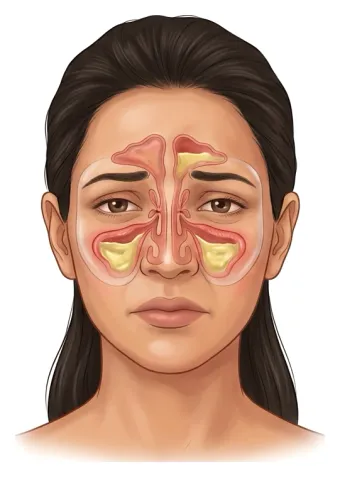
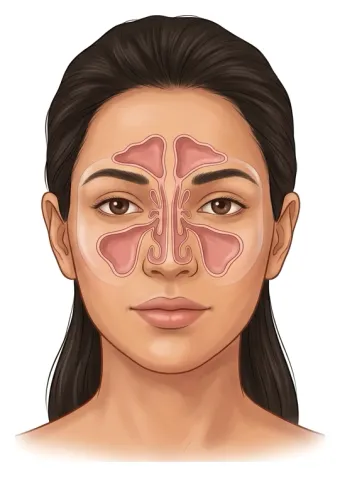
How Dr. Santosh does it
Method
Endoscope and microdebrider, through the nostril
Cuts and stitches
No cut on the face. Done through the nostril
What usually happens
The operation is done at Sinocare ENT Hospital while you are fully asleep (general anaesthetic). It is done entirely through the nostrils. It takes forty-five minutes to two hours, depending on how many sinuses are involved. Most people go home the same day, with a light dressing rather than heavy packing. Salt water (saline) rinses start as instructed. The first follow-up visit is in the second week. It includes a gentle clean of the operated spaces under the camera, and there are one or two more of those. Desk work at about a week, exercise at three to four weeks.
When this is offered
Sinusitis that goes on for months (chronic sinusitis) is about symptoms that last, not one bad week. Surgery is considered when:
- Symptoms have lasted more than twelve weeks: blockage, thick discharge, pressure in the face, a weaker sense of smell
- Full medical treatment has had a proper run. That means weeks of nasal steroid, saline rinses and the right antibiotics, not a three-day course
- A CT scan shows disease that matches the symptoms
- Infections keep coming back several times a year
- Complications have happened, or there is fungal disease, a mucus cyst (mucocele), or soft growths (polyps) blocking the nose
A CT scan can show sinus changes in someone with no symptoms. That alone is not a reason to operate. Such chance findings are common, and you are told when yours is one.
What the operation involves
The camera gives an enlarged view through the nostril. Fine instruments and a shaver (microdebrider) open the blocked drainage paths. How much is opened depends on which sinuses are diseased. Sometimes it is only the front group, sometimes the full set. Polyps are removed at the same time where they are present. The wall between the nostrils (the septum) is often straightened in the same sitting (septoplasty). A bent septum blocks the way to the very area that needs opening.
Sometimes the disease is widespread. Or it is a repeat operation, and earlier surgery has changed the usual landmarks. Then image-guided navigation is used. The tip of the instrument is shown on your CT scan as the operation goes on. So the eye and the base of the skull are kept at a known distance.
Forty-five minutes to two hours depending on how much is done, while you are fully asleep.
Before the operation
- CT of the sinuses around the nose (paranasal sinuses). It is both the diagnosis and the surgeon’s map. The shape of the bones near the eye and the base of the skull is read from it before surgery starts.
- A camera test of the nose (nasal endoscopy) at the hospital.
- A written record of full medical treatment, including saline rinses done the right way.
- Allergy and asthma checks where they matter. Sinus disease with asthma and aspirin sensitivity behaves differently and comes back more.
- Blood thinners managed with the doctor who prescribes them.
Recovery after endoscopic sinus surgery
First week. Blocked nose, blood-tinged discharge, a pressure like a headache, and tiredness. Sleep propped up. Do not blow your nose. Saline rinses start as instructed, and they become the centre of the recovery.
Weeks two to four. Cleaning at follow-up. Crusts and clots are cleared from the operated spaces under the camera at the hospital. This is uncomfortable rather than painful, and it is not optional. It is how the openings stay open.
Weeks four to twelve. Breathing and smell get better step by step. Most people return to desk work in about a week, and to exercise at three to four weeks.
Ongoing. Sinus surgery does not end sinus treatment. Nasal steroid and rinses usually go on for the long term, above all where polyps were present.
What we watch for
The sinuses share thin walls of bone with the eye and with the base of the skull. That is what makes this surgery precise work, and it is why the list below is specific. The serious items on it are rare. The CT is read for exactly those walls before the operation, and the camera shows them during it.
- Bleeding, now and then needing a light pack, rarely more.
- Scarring (adhesions) closing the paths that were opened. Mostly prevented by the follow-up cleaning. Treated at the hospital, now and then with a repeat operation.
- The disease coming back. Common where nasal polyps or aspirin-sensitive disease is involved. A repeat operation is not unusual in that group. It is discussed before the first operation, not after.
- Injury near the eye. Bruising around the eye is the mild end, and it settles on its own. At the rare and serious end are bleeding into the eye socket (orbit) and damage to sight. The wall of bone between sinus and eye is found on the CT and respected throughout.
- A leak of the fluid around the brain. Rare. If the thin roof of the sinus is broken, clear fluid can leak into the nose. It is recognised and repaired in the same operation.
- Change or loss of the sense of smell. It usually gets better, and now and then does not.
- Infection, treated with antibiotics.
Insurance and admission
Insurance. Insurance is accepted, both cashless and reimbursement, subject to the terms of your policy. Bring your card. The insurance approval (pre-authorisation) is handled for you.
Check your waiting period before you book. Many Indian health policies list this condition among “specific diseases” that carry a waiting period. It is commonly around two years from the start of the policy, even though the surgery itself is covered. Ask your insurer or TPA about the waiting period for this condition before you fix a date.
Booking. WhatsApp is the fastest way. Send your reports as photographs. You will be told whether you need to be seen at the hospital in KPHB, and what to bring. Bring your CT of the sinuses: without it, the visit cannot reach a decision. Also bring the medicines you take now, and your insurance card.
Questions patients ask
Is my sinus problem going to come back?
Sinusitis from a simple infection, once drained, tends to stay settled. Polyp disease is different. It is swelling of the whole lining, and it comes back in a good number of people. The surgery buys years of easier breathing and easier control with medicine. It does not switch the condition off.
Are there cuts on my face?
No. All access is through the nostrils.
Will my headaches go?
Sinus surgery treats sinus pain. Many “sinus headaches” are really migraine, and these do not get better with surgery. The CT and the pattern of your symptoms usually tell us which one you have. You hear it before the operation rather than after.
How soon can I fly?
Usually after a few weeks. You are given a date at the follow-up, once the spaces are clean.
Why is the follow-up cleaning so important?
The operated sinus heals like any raw surface. If crusts and scarring are left to set, the openings close again. The operation is not finished on the day of surgery.
Is FESS the same as a “sinus operation”?
Yes. Functional endoscopic sinus surgery is the sinus operation done through the nostrils with the camera. Nothing is cut on the face, and the aim is to open the natural drainage, not to strip the sinuses out.
Not sure you need this operation?
A consultation is allowed to end with "not yet".
WhatsApp us at +91 96765 24455