
Nose and sinuses · Procedure
Polypectomy: removing the polyps that block the nose
Nasal polyp surgery in KPHB, Hyderabad
Soft growths (polyps) blocking the nose and dulling smell.
Start with the symptom: Sinusitis

- Operation time
- 1.5 to 2.5 hours
- Anaesthetic
- General anaesthesia
- Hospital stay
- One day procedure
- Rest at home
- About a week
Operation time: from going to sleep to waking up. The surgery itself is shorter.
Nasal polyp surgery is planned at Sinocare ENT Hospital, KPHB Colony, Kukatpally, once sprays and rinses have had a proper run. Nasal polyps are soft swellings of the sinus lining. They are not painful in themselves. They grow into the passages of the nose and block them. They are not tumours. They are the visible end of a long-running swelling (inflammation) of the lining. That matters, because it explains both what surgery can do and what it cannot.
What the operation changes
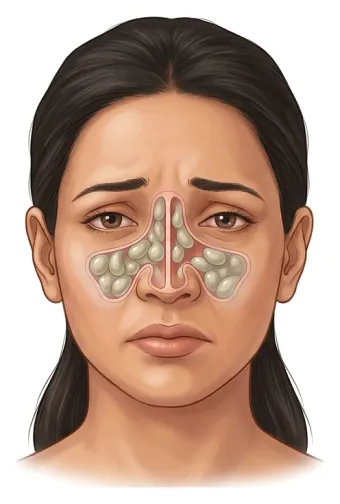
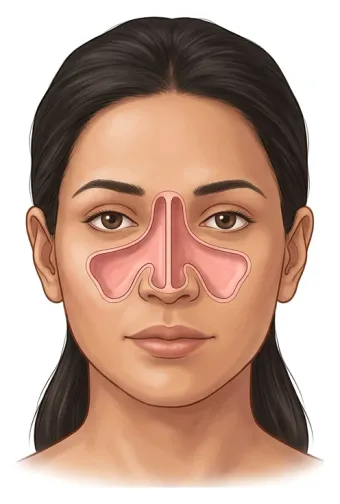
How Dr. Santosh does it
Method
Endoscope and microdebrider, through the nostrils
Cuts and stitches
No cut on the face. A light dressing in place of heavy packing
What usually happens
The operation is done at Sinocare ENT Hospital while you are fully asleep (general anaesthetic). It is done through the nostrils. It takes one to two hours, because the sinuses the polyps grow from are opened at the same time. Most people go home the same day. Salt water (saline) rinses start from day one. There is a follow-up clean under a thin camera in the second week. Desk work at about a week. Smell often comes back within the first month. A nasal steroid carries on afterwards, to slow the next polyps.
When this is offered
- A nose blocked on both sides, getting steadily worse over months
- Loss of smell, often the symptom people notice first and mind most
- Thick discharge, mucus down the back of the throat, heaviness in the face
- Polyps seen with the camera (endoscopy) and confirmed on CT
- Medicine (steroid spray, saline, sometimes a short course of steroid tablets) no longer keeping the disease in check
Polyps on one side only are a different matter, above all with bleeding or pain. Anything on one side is examined and scanned before anything is assumed. The tissue removed is sent to the lab to be examined (histology). That is standard, and it is not a cause for alarm by itself.
What the operation involves
It is done with the thin camera (endoscope), through the nostrils. The polyps are removed with a shaver (microdebrider). The sinuses they grow from are opened at the same time. Removing the visible polyp and leaving the diseased sinus behind means it will come back fast. In practice, this is endoscopic sinus surgery with the polyps cleared, not a separate operation.
How much is done depends on how much of the sinuses is involved. A light dressing is used rather than heavy packing.
Before the operation
- A camera test of the nose (nasal endoscopy) and a CT of the sinuses
- Asthma and aspirin sensitivity, asked about directly. Polyps, asthma and aspirin sensitivity go together. That mix comes back harder, and it changes the follow-up plan.
- An allergy check where your history fits
- A proper course of medicine first. Sometimes it shrinks the polyps enough to put surgery off.
Recovery after nasal polyp surgery
First week. A blocked nose, blood-stained discharge, pressure. Do not blow your nose. Saline rinses start as instructed.
Weeks two to four. A clean with the camera at follow-up. Smell often comes back in this window. For most patients, this is the moment the operation proves its worth.
Beyond. A nasal steroid for the long term, usually as a spray or added to the saline rinse, and regular check-ups. This part is not an extra. Surgery removes the polyps. The medicine is what slows the next ones.
What we watch for
- The polyps coming back. This is the most important thing on this page. Polyps come back in a large share of people. They come back sooner in those with asthma and aspirin sensitivity. Surgery plus steady medicine gives the longest gap. Surgery alone gives the shortest. You are told which group you are in before the operation.
- Bleeding. Polyp tissue bleeds more than normal lining. It is controlled during the operation, and a light dressing manages the first day.
- Scarring (adhesions) that needs clearing at a follow-up visit.
- Injury near the eye or the base of the skull. Rare, as with any endoscopic sinus surgery. The CT is read for those walls before the operation begins.
- Loss or change of smell. It usually gets better, and now and then does not come back.
- The need for another operation at some point in the future.
Insurance and admission
Insurance. Insurance is accepted, both cashless and reimbursement, subject to the terms of your policy. Bring your card. The insurance approval (pre-authorisation) is handled for you.
Check your waiting period before you book. Many Indian health policies list this condition among “specific diseases” that carry a waiting period. It is commonly around two years from the start of the policy, even though the surgery itself is covered. Ask your insurer or TPA about the waiting period for this condition before you fix a date.
Booking. WhatsApp is the fastest way. Send your reports as photographs. You will be told whether you need to be seen at the hospital in KPHB, and what to bring. Bring your CT, and every earlier operation note if the polyps have come back. Also bring the medicines you take now, and your insurance card.
Questions patients ask
Will my sense of smell come back?
It often gets much better, and often within the first few weeks. Sometimes the area of the smell nerve has been blocked and swollen for years. Then smell may come back only in part. You hear that before surgery, rather than being let down after it.
Will the polyps definitely come back?
Not in everyone. The odds are worse if you have asthma or aspirin sensitivity. They are better if you stay on your nasal steroid and rinses. The people who stop everything once they can breathe are the ones who see us again soonest.
Can they be treated without surgery?
Small polyps sometimes respond well to steroid spray and rinses. A short course of steroid tablets can shrink them. When the nose is fully blocked and smell is gone, medicine alone rarely gets it back.
Are polyps cancer?
Ordinary polyps on both sides are not cancer (benign). A polyp on one side is checked properly, and the tissue is sent for testing. That is routine.
Is there a newer treatment?
Newer injected medicines (biologics) exist for severe polyp disease that keeps coming back with asthma. They are for certain patients only. They are usually given after surgery rather than instead of it, and usually with a chest doctor involved. If you are in that group, it is discussed.
Is a nasal polyp a growth or a tumour?
No. Polyps are soft swellings of the sinus lining, not tumours. Ordinary polyps on both sides are not cancer. A polyp on one side is checked properly, and the tissue is examined.
Not sure you need this operation?
A consultation is allowed to end with "not yet".
WhatsApp us at +91 96765 24455