
Throat and voice · Procedure
Microlaryngeal surgery for a voice that has not recovered
Vocal cord polyp surgery in KPHB, Hyderabad
Hoarseness that has not recovered with voice therapy.
Start with the symptom: A hoarse voice

- Operation time
- 60 mins to 90 mins
- Anaesthetic
- General anaesthesia
- Hospital stay
- One day procedure
- Rest at home
- One to two weeks, with a week of voice rest
Operation time: from going to sleep to waking up. The surgery itself is shorter.
Surgery for a soft growth on the vocal cord (a vocal cord polyp) is planned at Sinocare ENT Hospital, KPHB Colony, Kukatpally. It is planned from a recorded camera look at the voice box (laryngoscopy) that you see yourself. A vocal cord polyp is a soft swelling on the edge of a vocal cord. It stops the two cords meeting cleanly. So the voice becomes hoarse and breathy, and speaking takes effort. Polyps usually follow one bout of violent voice use, like shouting at a match or a severe bout of coughing. Or they follow years of heavy voice use, in people who talk or sing for a living. Most are not cancer (benign). Most voices come back well once the polyp is removed and the voice is rested.
What the operation changes
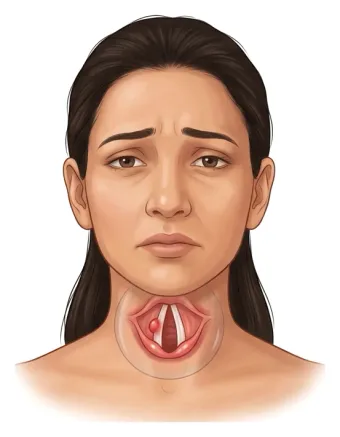
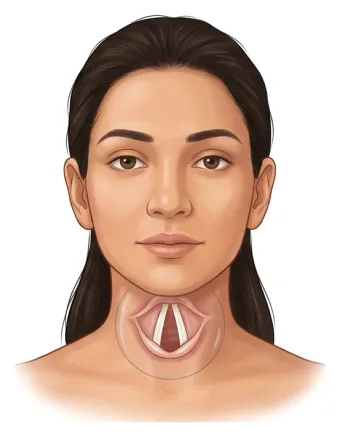
What usually happens
The operation is done at Sinocare ENT Hospital while you are fully asleep (general anaesthetic). It is done through the mouth, under a microscope, and takes twenty to forty-five minutes. You go home the same day. About a week of complete voice rest follows. Then you slowly return to speaking, ideally guided by a speech therapist. Desk work that does not need much talking is possible within a few days. A job that runs on the voice needs one to two weeks, and singers need longer. The tissue removed is sent for testing as a matter of routine.
First, the rule that matters most
Hoarseness lasting more than three weeks needs the vocal cords looked at. Not treated over the phone, and not given another course of antibiotics. Looked at, with a camera. Most of the time the cause is benign. The rule exists for the minority of cases where it is not. There, the difference between a look at three weeks and a look at three months is a different disease.
Some people should be examined without delay. That means smokers and drinkers. It also means anyone with hoarseness plus trouble swallowing, ear pain, a neck lump or weight loss.
When surgery is offered
- A polyp, cyst or nodule seen on examination that has not cleared with voice therapy
- Hoarseness that is affecting work: teachers, singers, sales, call centres, anyone whose income depends on their voice
- A voice that tires and fades away after an hour of speaking
- Tissue that needs a diagnosis under the microscope
Voice therapy comes first for most people, and it is not a way of putting things off. Nodules from misusing the voice often clear with therapy alone. They will come back after surgery if the way of speaking that caused them does not change. Operating on a nodule without dealing with how the voice is used means doing the same operation again in a year.
What the operation involves
Surgery on the voice box under a microscope (microlaryngeal surgery), while you are fully asleep. A rigid tube (laryngoscope) is passed through the mouth to hold the airway open. The growth is removed under a microscope, with fine instruments a few millimetres across. Or a laser is used, where the growth calls for one. There are no cuts on the outside.
The aim is to be precise, not to take a lot. The vibrating layer of the vocal cord is delicate. Removing more than the growth damages the voice for good. The tissue removed is sent for testing.
Twenty to forty-five minutes of surgery, and about 60 mins to 90 mins in the operating room, from going to sleep to waking up. One day procedure.
Before the operation
- A camera look at the voice box (laryngoscopy) at the hospital, with a bendy or rigid camera. The look is recorded, and you see the recording yourself before anything is decided.
- A trial of voice therapy in most cases, with a speech therapist
- Acid coming up from the stomach (reflux) treated, where it plays a part, since the acid keeps the cords irritated and swollen
- Stop smoking. Operating on the vocal cords of someone who keeps smoking gives a poor voice, and a problem that keeps coming back.
Recovery after vocal cord polyp surgery
Voice rest: complete silence for about a week. No whispering. It strains the cords more than speaking softly does. Write things down. This is the part of the operation the patient does, and it decides the result as much as the surgery does.
Weeks two to four. The voice comes back into use slowly, ideally with a speech therapist guiding it. It will be weak and unreliable at first. Do not push it. Do not test it by shouting to see if it works.
Weeks four to twelve. The voice keeps getting better. A singer or anyone who uses their voice for work should not go back to performing until cleared. That is usually longer than they want to hear.
Ongoing. Drinking enough water, no smoking, keeping reflux under control, and the new ways of speaking taught in therapy. The polyp was a sign of how the voice was used.
What we watch for
- The voice does not fully return to normal. Scarring of the vibrating layer of the vocal cord stiffens it, and a stiff cord vibrates poorly. This is uncommon with careful surgery. It is the reason the surgery removes the growth and nothing more.
- The growth coming back, above all where the voice use that caused it goes on. Voice therapy is what prevents it.
- Damage to teeth, lips or tongue from the rigid tube, which presses on the upper teeth. This is uncommon. Mention a loose or capped tooth beforehand, so it can be protected.
- Numbness or a change in taste on the tongue, temporary, from pressure during the operation.
- Swelling in the airway. Rare, and the reason you are watched after the operation before going home.
- Bleeding and infection, rare.
- The anaesthetic, talked through with the anaesthetist, the doctor who puts you to sleep.
Insurance and admission
Insurance. Insurance is accepted, both cashless and reimbursement, subject to the terms of your policy. Bring your card. The insurance approval (pre-authorisation) is handled for you.
Booking. WhatsApp is the fastest way. Send your reports as photographs. You will be told whether you need to be seen at the hospital in KPHB, and what to bring. Bring any earlier laryngoscopy report, the medicines you take now, and your insurance card.
Questions patients ask
Will I get my voice back?
Most people who have a benign polyp removed cleanly get a better voice than the one they came in with. How close it gets to their old voice depends on how long the polyp was there, and whether the cord itself has scarred. It also depends on whether the voice use that caused it changes.
Can I go back to teaching / singing / sales?
Yes, with a step-by-step return and, ideally, therapy. Coming back too early is the most common reason a good operation ends with a so-so voice.
Is it cancer?
Most polyps and nodules are not cancer. Every piece removed is sent for testing. That is routine, not a reason for alarm. Hoarseness that lasts in a smoker is examined sooner, for good reason.
Can it be treated without surgery?
Nodules from misusing the voice often respond to therapy alone. Polyps and cysts that have set in usually do not go away on their own.
Why can I not whisper?
Whispering forces the cords together in a tense, unhelpful way. Complete silence really is easier on them than a whisper is.
Is this the “voice box operation”?
Yes, in the sense people mean: microlaryngeal surgery removes the polyp from the edge of the vocal cord. Most benign polyps come away cleanly. Most voices come back well with rest and a step-by-step return.
Not sure you need this operation?
A consultation is allowed to end with "not yet".
WhatsApp us at +91 96765 24455