
Throat and voice
Hoarse for more than three weeks
Hoarse voice treatment in KPHB, Hyderabad
Most hoarseness is benign and settles with rest, reflux treatment and voice therapy. The scope is what makes that a safe thing to say.
Does this sound like you?
- A rough, breathy or weak voice for more than three weeks
- A voice that tires or disappears after an hour of talking
- Hoarseness after shouting, a cough, or a chest infection
- A teacher, singer or caller whose voice is failing at work
- Hoarseness with a cough, a lump in the throat, or acid
Hoarse voice treatment at Sinocare ENT Hospital, KPHB Colony, Kukatpally, starts with a recorded look at the vocal cords, which takes a minute. A hoarse voice after a cold or a day of shouting is normal and settles in a week or two. Hoarseness that lasts more than three weeks is different. That is not because it is usually serious. It is because it needs to be looked at rather than guessed at. Most causes are not serious: strain, reflux, a small swelling on a vocal cord. The rule exists for the few that are. The examination that settles it takes a minute in the chair.
What it looks like inside
What it usually is
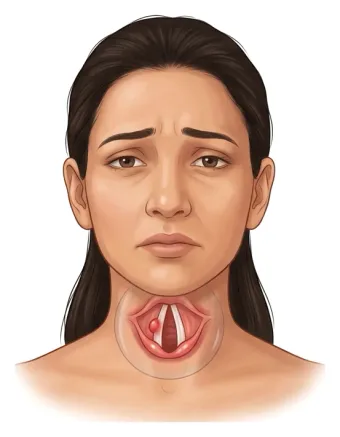
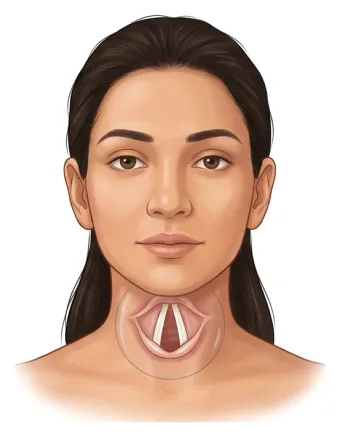
The voice is made by two vocal cords meeting and vibrating. Anything that stops them meeting cleanly makes the voice rough or breathy. Common causes are swelling from voice strain or a cough, and acid reflux irritating the cords, often without heartburn. Nodules and soft growths (polyps) are small swellings on the edge of a cord. They come from heavy or forceful voice use. A cord can be weak after a viral infection. In smokers particularly, there can be changes on the cord that need to be seen early. Thyroid problems and some medicines, including inhalers, also affect the voice.
What happens at the first visit
The vocal cords are examined for a few seconds. A thin, flexible camera is passed through the nose, or a rigid one is held at the back of the mouth. The examination is recorded and you see the recording yourself. That way the explanation is of something you have looked at. The neck is examined, and the thyroid where the history points there. In most cases the diagnosis is made at that visit, at the hospital in KPHB.
What helps, and what is tried first
- Voice rest and sensible voice use. No shouting, and no whispering, which strains the cords more than quiet speech does. People who talk for a living need breaks through the day.
- Hydration, and steam.
- Treating reflux, with diet, timing of meals and, where needed, medicine. It is a common cause, and it is often missed.
- Stopping smoking. It is the single thing that most changes what happens to a voice over years.
- Voice therapy, with a speech therapist, for nodules and for anyone whose voice is failing at work. Nodules from voice misuse often go with therapy alone. If the way of speaking that caused them stayed the same, they would come back after surgery.
When to come in sooner
Do not wait three weeks if the hoarseness comes with any of:
- Difficulty swallowing, or pain on swallowing
- Pain in the ear on one side
- A lump in the neck
- Coughing up blood, or unexplained weight loss
- Noisy or difficult breathing
- A history of smoking or heavy drinking
If an operation is ever needed
Some growths on a cord (a polyp, cyst or nodule) do not go with therapy. Then microlaryngeal surgery removes the growth under a microscope, through the mouth. It is a one day procedure at Sinocare ENT Hospital, followed by about a week of voice rest. The principle is precision: the growth and nothing more, because the vibrating layer of the cord is delicate. Tissue removed is examined as a matter of routine. Most people get a voice better than the one they came in with.
Questions patients ask
Is it cancer?
Most hoarseness is not, and the scope usually says so at the first visit. The three-week rule is for the small number where it is, and where being seen early makes the difference.
Do I need to stop talking completely?
Not usually, unless you have just had surgery. Sensible voice use, breaks, and no whispering are the rule for most people.
Will I get my singing voice back?
Usually, with a graded return and therapy. Coming back too early is the commonest reason a good result ends up only average.
Could it be my thyroid?
Sometimes. The thyroid sits against the nerves that move the vocal cords. A thyroid problem can show up as a voice change, and the neck is examined for that reason.
What is the “throat camera” test?
A laryngoscopy: a thin, flexible camera through the nose, or a rigid one at the back of the mouth, for a few seconds. It is recorded, and you watch the recording yourself.