
Throat and voice · Procedure
Obstructive sleep apnoea, assessment and surgery
Sleep apnoea surgery in KPHB, Hyderabad
Obstructive sleep apnoea, after a sleep study.
Start with the symptom: Snoring and sleep apnoea
- Operation time
- 60 mins to 90 mins
- Anaesthetic
- General anaesthesia
- Hospital stay
- One day procedure for nose surgery; one night for palate surgery
- Rest at home
- About a week for nasal surgery; about two weeks for palate surgery
Operation time: from going to sleep to waking up. The surgery itself is shorter.
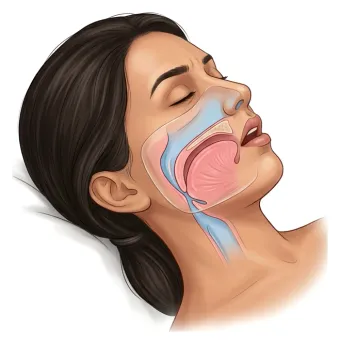
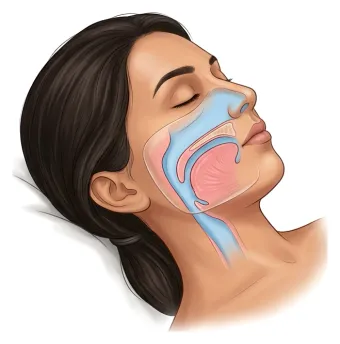
Sleep apnoea surgery is considered at Sinocare ENT Hospital, KPHB Colony, Kukatpally, only after a sleep study. It is also only considered where there is a blockage to remove. In obstructive sleep apnoea, the airway keeps collapsing during sleep. Breathing stops for seconds at a time, and oxygen falls. The brain wakes just enough to reopen the airway, and the cycle repeats. It can happen dozens of times an hour, all night, without the person ever knowing. It is not simply snoring. Left untreated, it is linked with high blood pressure, heart disease, stroke and diabetes. It is also linked with the sleepiness in the day that causes road accidents. But it is very treatable. Surgery is one of several routes, not the first.
What the operation changes
What usually happens
The first visit starts with a sleep study. It is done at home, with a small monitor you wear for one night. The airway is also examined, from nose to voice box, with a bendy thin camera (endoscope) in the chair. Treatment is then matched to what is found. That may be weight and sleeping position, or a trial of a breathing mask machine (CPAP) for moderate and severe apnoea. Surgery is for the person with a blockage that can be removed, or who cannot use the mask. Nose surgery is a one day procedure at Sinocare ENT Hospital. Palate surgery usually means one night, at Sinocare ENT Hospital or an associated hospital. You are told which at the first visit. A repeat sleep study afterwards is how the result is measured.
When to be assessed
- Loud snoring with pauses in breathing that someone has seen, usually reported by a partner
- Waking unrefreshed, however long you slept
- Falling asleep in the day, at a desk, in meetings, at traffic lights
- Waking with a headache, a dry mouth, or choking
- High blood pressure that is hard to control
- Weight gain, a collar size above about 17 inches, a set-back jaw, large tonsils
In children, the picture is different. The signs are snoring every night, breathing through the mouth, and restless sleep with the neck stretched back. There may be bedwetting, and behaviour in the day that is mistaken for inattention. In children the usual treatment is removing the gland behind the nose and the tonsils (adenoidectomy and tonsillectomy), and it works well.
The order this is done in
A sleep study comes first. Nobody should be operated on for sleep apnoea without one. It measures how often breathing stops per hour, and how far oxygen falls. It tells simple snoring apart from apnoea that is doing damage. A home sleep study is arranged for most people. An overnight study in a sleep laboratory is arranged where the case calls for it.
Then the airway is examined from the nose to the voice box with the bendy camera. This finds where the collapse happens. It may be the nose, the palate and tonsils, or the base of the tongue. Or it may be several levels at once.
Then treatment, matched to what is found:
- Weight loss and sleeping position change how severe it measures in many people. They are not a brush-off. They are the only steps that treat the cause underneath.
- CPAP is the standard treatment for moderate and severe apnoea. A mask gives gentle air pressure that holds the airway open. It works in nearly everyone who wears it. The whole problem is wearing it. Anyone who cannot bear it deserves a proper trial, with a mask that fits, before being told surgery is the other choice.
- Surgery, for those who cannot bear CPAP, or who have a blockage that can be removed. It is also for those who need their nose opened before they can bear CPAP at all.
What surgery involves
There is no single sleep apnoea operation. What is done depends on where the airway collapses.
- Nose surgery: straightening the wall between the nostrils (septoplasty), shrinking the shelves inside the nose (turbinate reduction), and sometimes sinus surgery. This rarely cures apnoea on its own. Its real value is often in making CPAP bearable for someone who could not use the mask because their nose was blocked.
- Tonsillectomy, where large tonsils are the blockage. In adults with big tonsils this can make a large difference. In children it is the main treatment.
- Palate surgery. The soft palate and the tissue around it are trimmed and moved to widen the airway. It works in the right patients. It is sore for about two weeks, and it depends on choosing the right patient.
- Operations at the base of the tongue for collapse behind the tongue, in some cases.
Sleep medicine is a team effort. Sometimes a physician needs to be involved, for CPAP or for the conditions that come with apnoea. That is arranged, not skipped.
Recovery after sleep apnoea surgery
It depends entirely on the operation. Nose surgery follows the septoplasty timeline. Palate surgery is sore for around two weeks, like a tonsillectomy. It comes with the same instruction to stay near a hospital, because of the bleeding risk.
A repeat sleep study after surgery is the only honest way to know whether it worked. Feeling better matters. But the number is what tells you whether your heart is still under strain every night. Plan for the repeat study from the start.
What we watch for
- Surgery may not cure the apnoea. This is the central point. Whether it works depends on where the blockage is and how severe the apnoea is. Collapse at several levels in a heavier patient is not reliably fixed by one operation. Some patients still need CPAP afterwards, at a lower pressure they can finally bear. Choosing the right patient, on a sleep study and an airway examination, is how disappointment is avoided.
- Pain, which is significant after palate surgery. It is managed with painkillers on a timetable.
- Bleeding, with the same emergency rule as after tonsillectomy, given to you in writing.
- Speech that sounds nasal, or drinks escaping into the nose, after palate surgery. Usually temporary, now and then not. Careful, limited trimming keeps it uncommon.
- A dry throat, or a feeling of a lump in the throat that lasts.
- Being put to sleep carries more risk in untreated sleep apnoea. That is why the diagnosis has to be known before any operation, not found afterwards. It is also why the anaesthetist, the doctor who puts you to sleep, sees the sleep study.
- Symptoms can come back with weight gain, or over the years.
Insurance and admission
Insurance. Insurance is accepted, both cashless and reimbursement, subject to the terms of your policy. Bring your card. The insurance approval (pre-authorisation) is handled for you. Most policies cover surgery for obstructive sleep apnoea when the sleep study records it. The sleep study itself is often treated as an outpatient test. So ask your insurer about it before you book it.
Booking. WhatsApp is the fastest way. Send your reports as photographs. You will be told whether you need to be seen at the hospital in KPHB, and what to bring. Bring your sleep study report, and your CPAP settings if you have tried one. Also bring the medicines you take now, and your insurance card.
Questions patients ask
Can I just have surgery instead of using CPAP?
Sometimes. It is a fair goal for people who truly cannot use a mask. But it is not a straight swap. CPAP treats the apnoea for as long as you wear it. Surgery treats a specific blockage. The sleep study afterwards tells you how much of the problem it removed.
I only snore, I do not stop breathing. Do I still need a study?
If snoring is the only symptom and you wake refreshed, possibly not. But get the study if anyone has seen you stop breathing, or you fall asleep during the day. Simple snoring and apnoea sound the same from the next room.
Will losing weight fix it?
It often makes it much better, sometimes enough to change the treatment. It is the hardest advice to follow, and the only one that treats the cause. So it is offered alongside everything else, not instead of it.
My child snores every night. Is it the same thing?
Same process, but a different cause and a different treatment. In children it is usually adenoids and tonsils, and removing them works well. It is worth acting on. Broken sleep in a growing child shows up in behaviour and school before anything else.
Which operation is done for sleep apnoea?
It depends on where the airway narrows: the nose, the palate and tonsils, or the base of the tongue. The sleep study and the camera test decide it. Surgery is one of several routes, not the first.
Not sure you need this operation?
A consultation is allowed to end with "not yet".
WhatsApp us at +91 96765 24455