
Neck and thyroid
A lump in the front of my neck
Thyroid swelling and neck lump treatment in KPHB, Hyderabad
Most thyroid nodules are benign and most never need an operation. Three tests settle it.
Does this sound like you?
- A swelling in the front of the neck that moves when you swallow
- A lump at the side of the neck that has not settled in three weeks
- A scan report with a word you did not understand
- Difficulty swallowing, or a tight feeling in the neck
- A hoarse voice with the swelling
Thyroid swelling and neck lump treatment at Sinocare ENT Hospital, KPHB Colony, Kukatpally, starts with three tests, not with an operation. A lump in the neck is frightening. Most people arrive with a scan report already in hand, and a word in it they did not understand. The calm facts first. Most thyroid lumps (nodules) are benign, meaning not cancer. Most never need an operation. Three tests answer the question in nearly every case. Having a nodule does not mean you need surgery. Lumps elsewhere in the neck are most often glands reacting to an infection, and those settle. The ones that do not are examined properly.
What it usually is
The thyroid sits at the front of the neck, wrapped around the windpipe. It moves up when you swallow, which is how a thyroid swelling is told from other lumps. Nodules in it are common, particularly in women. The great majority are benign cysts or overgrowths. A goitre is a gland that has grown larger as a whole. Occasionally a gland is overactive or underactive. That is found with a blood test rather than as a lump.
Lumps at the side of the neck are usually lymph glands, swollen with a throat or tooth infection. They settle within two or three weeks. A gland that stays enlarged beyond that, or keeps growing, is examined for a cause.
What happens at the first visit
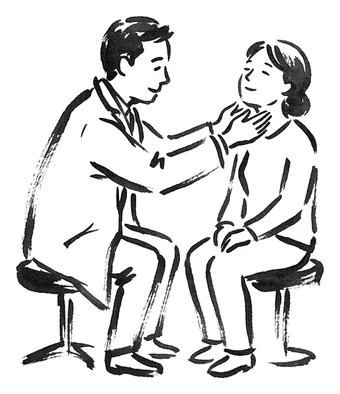
The neck is examined at the hospital in KPHB. The voice box is checked with a small scope, because the thyroid sits against the nerves that move the vocal cords. It helps to know how they work before anything is done. Then come the three tests that decide the matter. Where you already have a referral, they are arranged before the visit:
- thyroid blood tests
- an ultrasound of the neck, which gives the nodule a formal risk category
- for a nodule that needs it, a fine needle test (FNAC). It is usually guided by ultrasound, takes a few minutes, and tells us what the cells are.
With those three in hand, most of the decision can be made in one visit. Where a hormone specialist (endocrinologist) is needed, that is arranged as part of the plan.
What helps, and what is tried first
- Watching. A benign nodule with a low-risk ultrasound category is reviewed, usually with a repeat scan in six to twelve months. Most never change.
- Treating the gland’s function, with tablets for an underactive or overactive thyroid. This is a medical treatment rather than a surgical one.
- Draining a cyst with a needle, where a fluid-filled nodule is causing pressure.
- Antibiotics and time for a neck gland reacting to infection.
When to come in sooner
- A lump that is growing quickly
- A lump with a hoarse voice, difficulty swallowing, or difficulty breathing lying flat
- A hard, fixed lump, or one with a lump elsewhere in the neck
- A neck lump that has not settled after three weeks
- Night sweats or weight loss with a neck lump
If an operation is ever needed
Surgery is for a nodule with worrying features on the scan or the needle test, and for proven cancer. It is also for a gland large enough to press on the windpipe, and for an overactive gland that medicine has not controlled. Thyroidectomy removes one lobe or the whole gland through a crease in the lower neck. Dr. Santosh trained in head and neck surgery. The operation is mostly the work of protecting the nerves to the voice and the small glands that control calcium. It needs a larger operating room team and a stay of one to two nights, arranged at an associated hospital. The page below sets out the operation, the recovery and what is watched for.
Questions patients ask
Is a thyroid nodule cancer?
Most are not. The ultrasound category and the needle test answer that, and they are done before any decision about surgery.
My report says TIRADS 3. What does that mean?
A risk category from the ultrasound. Lower numbers are lower risk. The number decides whether a needle test is needed and how often to scan again. It is explained against your own report.
Will I need tablets for life after surgery?
After removal of the whole gland, yes, one tablet a morning. After removal of one lobe, most people do not.
A gland in my neck has been up for two weeks after a sore throat. Is that normal?
Yes. Glands react to infection and settle within two or three weeks. One that stays up beyond that, or keeps growing, should be examined.
Does every thyroid lump need an operation?
No. Most nodules are benign and most never need surgery. The blood tests, the ultrasound category and, where needed, the needle test decide it. They are arranged before anything else.