
Throat and voice
Sore throats that keep coming back
Tonsillitis treatment in KPHB, Hyderabad
Most sore throats are treated in a week. Tonsils come out only when the record says they should.

Does this sound like you?
- A sore throat with fever several times a year
- White spots on the tonsils, swollen glands in the neck
- Antibiotics every few months
- Bad breath and small white lumps from the tonsils
- A sore throat that has lasted more than two weeks
Tonsillitis treatment at Sinocare ENT Hospital, KPHB Colony, Kukatpally, starts with the record of infections, not with a date for surgery. Everybody gets sore throats. Most are caused by a virus, most settle in a few days, and most never need an ENT surgeon. The ones that come here are the ones that keep coming back. Each time there is a sore throat with fever, white spots on the tonsils and swollen neck glands. It happens several times a year, and each one needs a course of antibiotics and a week off. That pattern has a name: tonsillitis that keeps coming back (recurrent tonsillitis). It has a threshold. Above it, removing the tonsils is the right answer. Below it, it is not.
What it looks like inside
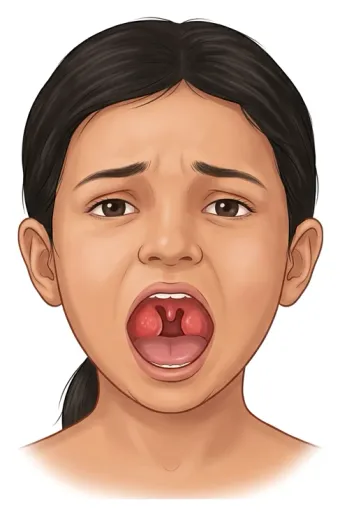
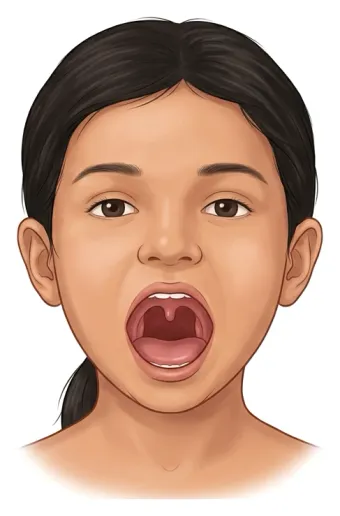
What it usually is
The tonsils are two pads of immune tissue on either side of the throat. In some people they trap germs in their crevices and become infected again and again. Each episode is a proper infection, not a scratchy throat. Between episodes they can stay enlarged. Tonsil stones are small white lumps with a strong smell. They form in the same crevices and are a nuisance rather than a danger.
A sore throat that will not go away at all is a different matter from one that keeps coming back. It is examined differently.
What happens at the first visit
At the hospital in KPHB, Dr. Santosh looks at the throat and the tonsils and feels the neck. He checks the nose and ears too, because a blocked nose and mouth-breathing keep a throat sore. The tonsils are graded by size. The most useful thing you can bring is the record: prescriptions, dates and doctor’s notes for each episode. The history is the diagnosis here. A written record carries more weight than a memory of “frequent sore throats”.
How tonsillitis is treated, and what is tried first
Each episode is treated on its own:
- The right antibiotic course, completed, where the infection is bacterial.
- Pain relief and gargles for the throat itself.
- Fluids and rest. A throat infection is a whole-body illness for a few days.
- Treating the nose, where a blocked nose is making the throat worse.
Tonsil stones are managed with gargling and, where they persist, cleaning at the hospital. They are not on their own a reason to remove the tonsils.
When to come in sooner
- A sore throat with difficulty opening the mouth, or difficulty swallowing saliva. This can mean an abscess beside the tonsil, and it needs treatment the same day.
- A sore throat lasting more than two weeks without fever
- One tonsil visibly larger than the other
- A sore throat with a hoarse voice for more than three weeks, or with a neck lump
If an operation is ever needed
The usual threshold for removing the tonsils is around seven recorded episodes in one year. Or five a year for two years, or three a year for three years. Each episode needs fever and a doctor’s record. Above that line, removing the tonsils (tonsillectomy) is a well-understood operation done here by Dr. Santosh. He uses coblation, which bleeds less during surgery and hurts less afterwards than the older methods. The two-week recovery and its precautions are the same. Below the line, you are told so, and time is usually the better treatment. A fair number of people sent for tonsillectomy do not meet the threshold.
Questions patients ask
Will I get more infections without my tonsils?
No. The immune system does not depend on the tonsils after early childhood. People who have them removed for the right reasons usually have fewer throat infections afterwards.
Is tonsillectomy worse for adults?
The recovery is longer in adults, about two weeks, and it is sore. It is planned for, with painkillers on a schedule and written instructions, and it is manageable.
Can the tonsils be shrunk instead of removed?
Not reliably. Where the reason is infection, removal is what stops the infections.
My child has large tonsils but no infections. Should they come out?
Only if they are blocking breathing in sleep. Large tonsils in a child who sleeps and eats well are left alone and reviewed.
When should tonsils be removed?
When the record is above the threshold: several infections a year, each with fever, white spots and a course of antibiotics. Or when the tonsils are large enough to block breathing in sleep. Below that, they are treated and reviewed.