
Throat and voice · Procedure
Tonsils operation: removing the tonsils
Tonsillectomy in KPHB, Hyderabad
Repeated tonsillitis, or tonsils obstructing sleep.
Start with the symptom: Sore throats and tonsillitis

- Operation time
- 60 mins to 90 mins
- Anaesthetic
- General anaesthesia
- Hospital stay
- Usually one night
- Rest at home
- Children about a week; adults two weeks
Operation time: from going to sleep to waking up. The surgery itself is shorter.
Tonsillectomy is decided at Sinocare ENT Hospital, KPHB Colony, Kukatpally, on the record of infections or a sleep study, not on an impression. The tonsils sit on either side of the throat. In early childhood, they are part of the body’s defence against infection. Removing them is one of the most common operations in ENT. It is also one of the most often done for the wrong reasons. That is why the decision here rests on a record, not an impression. Two situations justify it. One is infections that keep coming back often enough to disrupt life (recurrent tonsillitis). The other is tonsils large enough to block breathing during sleep. When one of those applies, it is a well-understood operation. The recovery is uncomfortable, but you can predict it.
What the operation changes
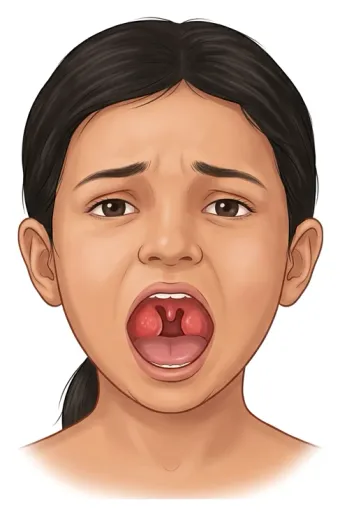
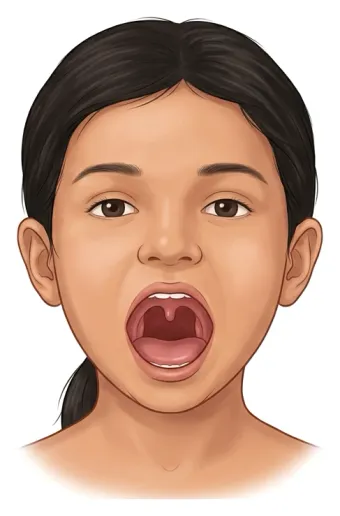
How Dr. Santosh does it
Method
- Dr. Santosh
- Coblation, a wand that dissolves the tissue at a comparatively low temperature
- Older method
- Snare and cold steel dissection
Cuts and stitches
No external cuts. Done through the mouth
What usually happens
The operation is done while you are fully asleep (general anaesthetic). It is done through the mouth and takes thirty to forty-five minutes. Most patients stay one night to be watched, above all young children and adults. The stay is at Sinocare ENT Hospital, or at an associated hospital where an overnight bed is needed. You are told which at the first visit. You go home the next morning with painkillers on a timetable and a written sheet of what to expect. Children are back at school in about a week. Adults should plan two weeks away from work. There is a check-up in the second week.
When this is offered
Tonsils are graded one to four by size. The grade sits alongside the history when the decision is made. Small tonsils that keep getting infected are treated with medicine first. That means the right antibiotic course for each bout, with gargles for the pain, such as benzydamine. Surgery comes into the talk when the infections keep coming despite that, or when the tonsils are large enough to block the airway.
For infections that keep coming back, the usual limit is around seven bouts in one year. Over two years it is five a year, and over three years, three a year. Each bout has fever, pus on the tonsils and swollen neck glands, and a doctor’s record of it. A history of “frequent sore throats” without that pattern is usually not a reason for surgery, and you are told so.
For blocked breathing, which is the most common reason in children:
- Loud snoring every night, with pauses in breathing
- Sleeping with the neck stretched back, restless, sweating
- Breathing through the mouth, tiredness in the day, irritability, poor focus at school
- Trouble eating, or a child who is small for their age because eating is hard work
Other reasons: a pocket of pus around the tonsil (quinsy), above all if it keeps coming back. Tonsil stones that keep coming back with bad breath that will not settle are another. So is one tonsil larger than the other, which is checked, not assumed.
What the operation involves
You are fully asleep, and it is done through the mouth. There are no cuts on the outside. The tonsil is removed from its bed, and bleeding is controlled before you wake.
Coblation tonsillectomy. The older way was a wire loop (snare) and cutting with steel. Coblation uses a wand that dissolves the tissue at a fairly low heat, rather than cutting and burning through it. That means less bleeding during the operation, and less pain in the days after. It does not take away the bleeding risk described below. It does not shorten the two weeks of care that follow either. It makes those two weeks easier than they used to be.
The gland behind the nose (the adenoids) is removed in the same sitting where both block the airway. This is common in children.
Thirty to forty-five minutes. Staying one night to be watched is usual, above all in young children and in adults.
Before the operation
- A record of each bout, if infection is the reason. Bring prescriptions and records. The history is the reason.
- A sleep study where blocked breathing is the reason and the picture is unclear, above all in adults. See sleep apnoea surgery.
- A look at the nose and adenoids in children, since both usually play a part.
- A check that you are fit to be put to sleep. Tell us of any family history of bleeding problems.
- Fasting exactly as the anaesthetist, the doctor who puts you to sleep, tells you.
Recovery after tonsillectomy
Recovery from tonsillectomy is sore, it lasts about two weeks, and it follows a pattern. Knowing the pattern in advance is most of what makes it manageable.
Days 1 to 3. A sore throat, pain felt in both ears, and bad breath. A white-grey coating covers the places where the tonsils were. It looks alarming, but it is normal healing. Take painkillers by the clock, not only when it hurts.
Days 4 to 8. Usually the most uncomfortable stretch. It catches people out, because they expected steady progress. Pain often peaks now. Swallowing is the work of the week, and eating and drinking are the job.
Days 8 to 14. The coating comes away, and the pain settles over a few days. Children usually recover faster than adults. An adult should plan on two weeks away from work, not two days.
Throughout. Drink all the time. Eat normal food where you can. Chewing and swallowing keep the area clean and speed healing, more than a diet of ice cream does. Avoid crowds and infections for two weeks. Stay near home for the full two weeks, because of the bleeding warning below.
What we watch for
The risks are explained before you agree to the operation, and each one comes with a plan.
- Bleeding, which is the one that matters. A small number of patients bleed. It happens most often between day 5 and day 10, when the healing layer comes away. It can be minor. It can also be sudden and heavy. Coblation reduces bleeding during the operation. The risk in the second week belongs to the healing area, and it is managed by being prepared. Any bleeding from the mouth after tonsillectomy means going to a hospital emergency department at once. Do not wait to see if it stops, and do not phone first. Now and then, a return to the operating room is needed to stop it. This is why you stay within reach of a hospital for two weeks. It is also why you go home with that instruction in writing.
- Not drinking enough (dehydration), above all in children who refuse to drink because it hurts. It is the most common reason for coming back into hospital. It is prevented by painkillers on a timetable and drinks by the clock.
- Pain worse than expected, and pain felt in the ears. Both are normal, and both are explained in advance. The pain plan is written for you before you go home.
- Infection of the healing area, treated with antibiotics.
- Voice change, uncommon and usually temporary.
- Damage to teeth or lips from the tool that holds the mouth open. This is uncommon. Mention a loose or capped tooth beforehand.
- The anaesthetic, talked through with the anaesthetist.
Insurance and admission
Insurance. Insurance is accepted, both cashless and reimbursement, subject to the terms of your policy. Bring your card. The insurance approval (pre-authorisation) is handled for you.
Check your waiting period before you book. Many Indian health policies list this condition among “specific diseases” that carry a waiting period. It is commonly around two years from the start of the policy, even though the surgery itself is covered. Ask your insurer or TPA about the waiting period for this condition before you fix a date.
Booking. WhatsApp is the fastest way. Send your reports as photographs. You will be told whether you need to be seen at the hospital in KPHB, and what to bring. Bring your record of infections (prescriptions, dates, doctor’s notes), because the history is the reason. Also bring the medicines you take now, and your insurance card.
Questions patients ask
Will my child get more infections without tonsils?
No. The immune system does not depend on the tonsils beyond early childhood. Children who have had them removed for the right reasons usually have fewer throat infections afterwards, not more.
Is coblation safer than the old method?
It bleeds less during the operation and hurts less afterwards. It does not remove the risk of bleeding in the second week. That risk belongs to the healing area, not to the tool. That is why the two-week care is the same whichever method is used.
How long off school or work?
Children, about a week to ten days. Adults, two weeks, and plan for it rather than hoping.
Will the snoring stop?
In children with large tonsils and adenoids, it usually gets much better. In adults, snoring has more causes, and the answer depends on the sleep study.
Does it have to be done in the summer holidays?
That is for convenience, not a medical need. What matters is that someone is at home with the patient for two weeks.
Is this the “tonsils operation”?
Yes. Tonsillectomy removes the tonsils. It is done for two reasons: infections that keep coming back often enough to disrupt life, or tonsils large enough to block breathing during sleep.
Not sure you need this operation?
A consultation is allowed to end with "not yet".
WhatsApp us at +91 96765 24455